
Some months ago, our Banned Books Fridays derailed as did our book reporting – and it did so during time when I feel that shouting against book bans and censorship is absolutely imperative as our rights are being threatened on many fronts.
(Unfortunately, surgery and sickness prevailed for a bit.)
That said, both Banned Book Fridays and book reports in general are back permanently. ❤
(Even if they are returning on a Sunday. hehe.)
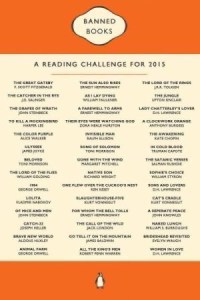
First, I’m going to *finally* complete our original Banned Books List – I stopped at 39/44 – and plan to wrap it quickly over the next couple of weeks.
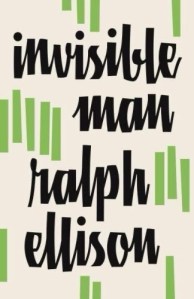
Today’s book from the list is Ralph Ellison’s Invisible Man.
Invisible Man was a reread for me, having first experienced it my senior year of high school, and it is powerful.
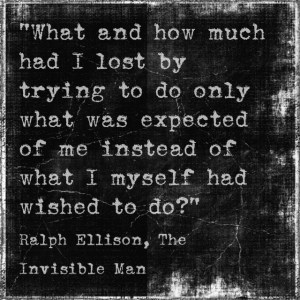
Throughout the novel, the nameless narrator – who is writing from underground, in a safe space lit by 1369 light bulbs, with Louis Armstrong playing – tells a story of the unbelievable cruelty and racism he has faced – in the most haunting and unforgettable way.
(I am not summarizing this book as I usually do with our banned books because I want to encourage everyone to read it right now. It could not be more appropriate and timely)
It is also bears mentioning that Invisible Man won the National Book Award for Fiction in 1953, with Ellison being the first African American author to win the award.
After some 60 years of assignment in high school and college classrooms, the novel was banned in North Carolina in 2013.
Yes, in 2013 some North Carolina parents decided that the content offended them and they sought to ban it.
Thankfully, due to community outcry – and a heroic local bookstore giving away free copies to all high school students – the ban was soon lifted.
Still, this ban due to “offensive content” was a thinly veiled attack on freedom of speech – and, in particular, seeking to silence minority voices.
These who would seek to do so have only become more emboldened recently, they are much powerful than they were in 2013, and we have to stand up to them loudly.
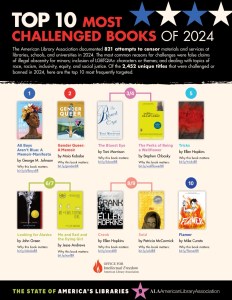
That is why, after we finish this original banned books list in the coming few weeks, I’m going to move on to the books most challenged right now. The lists I have seen have been eye opening and I think we need to discuss all that is at stake as some assemblies feel empowered to control access to books and information – particularly as it pertains to minority and marginalized people groups.
Read, read, and read some more, y’all. Just keep reading – and we’ll discuss more banned books on Friday.
Be well, everybody. Take care of yourselves and each other.
Grace and Blessings.
The Great Gatsby – F. Scott Fitzgerald
The Awakening – Kate Chopin
Lady Chatterley’s Lover – D.H. Lawrence
Animal Farm – George Orwell
1984 – George Orwell
Slaughterhouse Five – Kurt Vonnegut
Brave New World – Aldous Huxley
Their Eyes Were Watching God – Zora Neale Hurston
A Separate Peace – John Knowles
Lolita – Vladmir Nabokov
A Farewell to Arms – Ernest Hemingway
The Grapes of Wrath – John Steinbeck
As I Lay Dying – William Faulkner
LOTR – The Fellowship of The Ring – J.R.R. Tolkien
LOTR – The Two Towers – J.R.R. Tolkien
LOTR – The Return of the King – J.R.R. Tolkien
Cat’s Cradle – Kurt Vonnegut
In Cold Blood – Truman Capote
Song of Solomon – Toni Morrison
To Kill a Mockingbird – Harper Lee
Of Mice and Men – John Steinbeck
Lord of the Flies – William Golding
A Clockwork Orange – Anthony Burgess
For Whom the Bell Tolls – Ernest Hemingway
The Sun Also Rises – Ernest Hemingway
One Flew Over the Cuckoo’s Nest – Ken Kesey
Beloved – Toni Morrison
The Color Purple – Alice Walker
The Call of the Wild – Jack London
Gone with the Wind – Margaret Mitchell
Go Tell It on the Mountain – James Baldwin
Women in Love – D.H. Lawrence
Ulysses – James Joyce
The Catcher in the Rye – J.D. Salinger
Catch-22 – Joseph Heller
Sons and Lovers – D.H. Lawrence
Naked Lunch – William Burroughs
The Satanic Verses (substitute Knife) – Salman Rushdie
The Jungle – Upton Sinclair
Invisible Man – Ralph Ellison
 the autoimmune hippie.